Aṣṭāvakra Gītā
Overview
This article serves as an introduction to the Astavakra Gita by outlining its key takeaways and chapter-wise insights, based on my learnings from the Gita so far. The Bhagavad Gita teaches action, devotion, discipline, duty, and surrender. The Astavakra Gita is different. It is one of the most direct nondual teachings in Indian spirituality. It does not slowly build a path through rituals, practices, social duties, or gradual purification. Instead, it declares the highest truth immediately: you are not the body, not the mind, not the doer, not the sufferer; you are pure awareness itself.
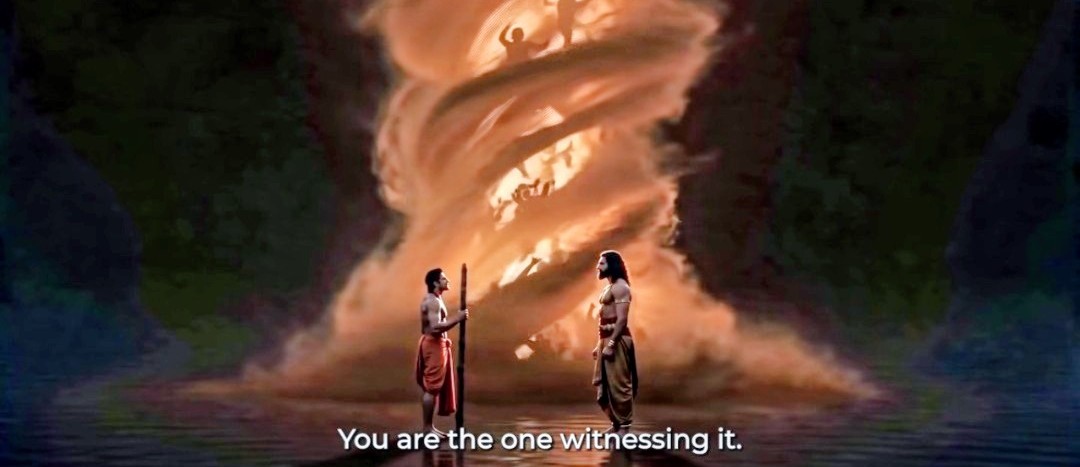
The dialogue is between King Janaka and Sage Aṣṭāvakra. Janaka asks how knowledge, liberation, and detachment are attained. Aṣṭāvakra replies with uncompromising Advaita: bondage is identification; liberation is recognition. The Self was never bound. The problem is not that the Self has to become free; the problem is that consciousness has mistaken itself for body, mind, desire, role, and story. This text must be understood carefully. It does not mean one should become careless, irresponsible, emotionless, or passive in daily life. Its real teaching is inner freedom: act in the world, but know that your deepest identity is untouched awareness. The Bhagavad Gita says: act rightly, surrender, and realize God. The Astavakra Gita says: know that you are already the Self, and bondage collapses.
Introduction: The Astavakra Gita as the Scripture of Direct Freedom
The two Gitas speak to different levels of the seeker.
When the mind is confused, the Bhagavad Gita gives discipline. When the mind is ready for direct truth, the Astavakra Gita gives the final sword.
Its central message is this:
- You are not the body.
- You are not the mind.
- You are not the doer.
- You are not the sufferer.
- You are not incomplete.
- You are pure awareness, free, full, silent, and untouched.
This version is more direct Advaita than the Bhagavad Gita guide because the Astavakra Gita itself is much more uncompromising and inward-facing.
Chapter 1: The Direct Teaching of the Self
Janaka asks Aṣṭāvakra how knowledge, liberation, and detachment can be attained. Aṣṭāvakra responds directly: if you want liberation, let go of attachment to sensory objects and cultivate forgiveness, sincerity, compassion, contentment, and truth. He then gives the central teaching: you are not earth, water, fire, air, or space. You are the witness of all these.
This chapter begins by cutting identity away from the body and elements. Aṣṭāvakra does not say, "You will become free later." He says, "Know yourself as consciousness now." Bondage is not external; it is the belief "I am the body," "I am the doer," "I am my role," "I am my suffering."
When stress arises, do not immediately say, "I am stressed." Instead, observe: "Stress is appearing in awareness." This creates a gap between your true Self and the mental event. You still respond practically, but you stop becoming the emotion.
Questions to Ask Yourself
Key Verse
Sanskritन पृथ्वी न जलं नाग्निर्न वायुर्द्यौर्न वा भवान्। एषां साक्षिणमात्मानं चिद्रूपं विद्धि मुक्तये॥
English Transliterationna pṛthvī na jalaṃ nāgnir na vāyur dyaur na vā bhavān | eṣāṃ sākṣiṇam ātmānaṃ cidrūpaṃ viddhi muktaye ||
English Translation"You are not earth, nor water, nor fire, nor air, nor space. Know yourself as the witness of these, the nature of pure consciousness; this is liberation."
Chapter 2: Janaka’s Awakening
After hearing Aṣṭāvakra’s instruction, Janaka immediately recognizes the Self. He declares that he is pure, stainless, peaceful awareness beyond nature. The world appears in him like waves in the ocean or ornaments in gold.
This chapter shows the suddenness of recognition. Janaka does not "achieve" the Self; he recognizes what was always true. The world does not disappear, but its status changes. It is no longer experienced as a separate reality threatening the Self.
When life feels overwhelming, remember the ocean-wave metaphor. Thoughts, emotions, duties, and events are waves. You are the ocean of awareness in which they arise and dissolve.
Questions to Ask Yourself
Key Verse
Sanskritयथा न तोयतो भिन्नास्तरंगाः फेनबुद्बुदाः। आत्मनो न तथा भिन्नं विश्वमात्मविनिर्गतम्॥
English Transliterationyathā na toyato bhinnās taraṅgāḥ phena-budbudāḥ | ātmano na tathā bhinnaṃ viśvam ātma-vinirgatam ||
English Translation"Just as waves, foam, and bubbles are not separate from water, so the universe arising from the Self is not separate from the Self."
Chapter 3: The Test of Realization
Aṣṭāvakra challenges Janaka’s realization. If you truly know the Self as imperishable and one, why are you still interested in wealth, pleasure, ownership, or craving? The chapter exposes the gap between intellectual knowledge and lived freedom.
This chapter is not against money or life. It is against unconscious dependence. If one claims to know the Self but is still ruled by craving, fear, and possessiveness, the knowledge has not yet become stable.
Use daily irritation as a test. If praise excites you and criticism destroys you, the ego is still holding the steering wheel. This does not mean suppress feelings; it means see how much identity is invested in external events.
Questions to Ask Yourself
Key Verse
Sanskritसर्वभूतेषु चात्मानं सर्वभूतानि चात्मनि। मुनेर्जानत आश्चर्यं ममत्वमनुवर्तते॥
English Transliterationsarvabhūteṣu cātmānaṃ sarvabhūtāni cātmani | muner jānata āścaryaṃ mamatvam anuvartate ||
English Translation"Seeing the Self in all beings and all beings in the Self, it is astonishing if a sage still continues in possessiveness."
Chapter 4: The Freedom of the Wise
Aṣṭāvakra describes the liberated person. Such a person may live, act, enjoy, and move through the world, but is inwardly untouched. Merit and sin do not cling to one who knows the Self, just as smoke does not stain the sky.
The liberated one is not defined by outer appearance. Freedom is inner non-attachment. The wise may appear ordinary, but inwardly they are not bound by psychological clinging.
Do your work, enjoy your relationships, fulfill responsibilities, but ask: "Is this action leaving residue in me?" If you are constantly replaying, regretting, craving, or defending, attachment is present.
Questions to Ask Yourself
Key Verse
Sanskritतज्ज्ञस्य पुण्यपापाभ्यां स्पर्शो ह्यन्तर्न जायते। न ह्याकाशस्य धूमेन दृश्यमानापि सङ्गतिः॥
English Transliterationtajjñasya puṇya-pāpābhyāṃ sparśo hy antar na jāyate | na hy ākāśasya dhūmena dṛśyamānāpi saṅgatiḥ ||
English Translation"For the knower of Truth, merit and sin do not touch the inner being, just as smoke, though seen in the sky, does not truly stain the sky."
Chapter 5: Dissolution Into the Self
Aṣṭāvakra teaches that the Self has no real attachment to anything. The world rises like bubbles from the ocean and appears like a snake imagined in a rope. The instruction is to dissolve false identification and rest in the Self.
This chapter is about laya, dissolution, not physical destruction, but the falling away of mental projection. The world is experienced, but the imagined separateness of the ego begins to dissolve.
When a problem appears, separate the actual situation from the mental projection. The event may be real at the practical level, but the fear-story built around it may be the "snake on the rope."
Questions to Ask Yourself
Key Verse
Sanskritप्रत्यक्षमप्यवस्तुत्वाद् विश्वं नास्त्यमले त्वयि। रज्जुसर्प इव व्यक्तं एवमेव लयं व्रज॥
English Transliterationpratyakṣam apy avastutvād viśvaṃ nāsty amale tvayi | rajju-sarpa iva vyaktaṃ evam eva layaṃ vraja ||
English Translation"Though it appears before you, the world has no independent reality in the stainless Self; like a snake imagined in a rope, let it dissolve in this understanding."
Chapter 6: The Self as Infinite Space
Aṣṭāvakra uses metaphors of space, ocean, shell, and silver to describe the Self. The Self is infinite like space; the world is like a pot within it. The Self is the ocean; the world is like waves.
The chapter removes the idea that one must reject or grasp the world. From the standpoint of the Self, there is nothing to renounce and nothing to acquire. The Self is already whole.
When you feel incomplete, pause and ask: "What am I trying to add to myself?" You may still pursue goals, but not from the belief that you are fundamentally lacking.
Questions to Ask Yourself
Key Verse
Sanskritआकाशवदनन्तोऽहं घटवत् प्राकृतं जगत्। इति ज्ञानं तथैतस्य न त्यागो न ग्रहो लयः॥
English Transliterationākāśavad ananto'haṃ ghaṭavat prākṛtaṃ jagat | iti jñānaṃ tathaitasya na tyāgo na graho layaḥ ||
English Translation"I am infinite like space; the natural world is like a pot within it. Knowing this, there is no renouncing, no grasping, and no dissolving to be done."
Chapter 7: Janaka’s Oceanic Rest
Janaka declares his realization in oceanic language. The universe moves within him like a boat on the vast ocean. Waves may rise and fall, but the ocean is neither increased nor diminished.
This chapter shows stabilized nondual vision. Experience continues, but the Self is not affected by the rise and fall of experience. Gain does not increase the Self; loss does not reduce it.
Use this chapter when facing success or failure. Success is a wave. Failure is a wave. Praise is a wave. Criticism is a wave. The Self is the ocean.
Questions to Ask Yourself
Key Verse
Sanskritमय्यनन्तमहाम्भोधौ जगद्वीचिः स्वभावतः। उदेतु वास्तमायातु न मे वृद्धिर्न च क्षतिः॥
English Transliterationmayy ananta-mahāmbhodhau jagad-vīciḥ svabhāvataḥ | udetu vāstam āyātu na me vṛddhir na ca kṣatiḥ ||
English Translation"In me, the infinite ocean, the wave of the world naturally rises and falls. By its rising I do not increase; by its setting I do not decrease."
Chapter 8: Bondage and Liberation
Aṣṭāvakra gives a precise definition: bondage is when the mind desires, grieves, grasps, rejects, rejoices, or becomes angry. Liberation is when the mind does not cling to these movements.
This is one of the most practical chapters. Bondage is not a place; it is a pattern of mind. Liberation is not an escape; it is freedom from compulsive mental reaction.
Watch the mind for six movements: wanting, grieving, grabbing, rejecting, excitement, and anger. These reveal where bondage is active.
Questions to Ask Yourself
Key Verse
Sanskritतदा मुक्तिर्यदा चित्तं न वाञ्छति न शोचति। न मुञ्चति न गृह्णाति न हृष्यति न कुप्यति॥
English Transliterationtadā muktir yadā cittaṃ na vāñchati na śocati | na muñcati na gṛhṇāti na hṛṣyati na kupyati ||
English Translation"Liberation is when the mind does not desire, does not grieve, does not reject, does not grasp, does not become excited, and does not become angry."
Chapter 9: Detachment From Mental Restlessness
Aṣṭāvakra points out that worldly activity, debate, ambition, and craving never produce final rest. The world is impermanent and touched by suffering. True peace comes by giving up deep-seated desires.
The chapter does not condemn life. It exposes dependence. As long as the mind is driven by vasanas, latent desires and compulsions, it remains in samsara.
Notice repeated patterns: the same worry, craving, comparison, or ambition returning again and again. That repeated inner pull is a vasana. Freedom begins by seeing it clearly.
Questions to Ask Yourself
Key Verse
Sanskritवासना एव संसार इति सर्वा विमुञ्च ताः। तत्त्यागो वासनात्यागात्स्थितिरद्य यथा तथा॥
English Transliterationvāsanā eva saṃsāra iti sarvā vimuñca tāḥ | tat-tyāgo vāsanā-tyāgāt sthitir adya yathā tathā ||
English Translation"Vasanas themselves are samsara; therefore release them all. By abandoning these latent desires, remain as you are."
Chapter 10: Desire as Bondage
Aṣṭāvakra identifies craving as the root of bondage. Wherever there is thirst, there is samsara. Wealth, pleasure, family, status, and good works cannot give final rest if the mind remains thirsty.
The issue is not objects themselves; it is dependence on objects for identity and completion. Desire says, "I am not whole until I get this." Aṣṭāvakra cuts this illusion.
Before pursuing something, ask: "Is this a clean preference, or am I making my happiness depend on it?" Preferences are natural. Psychological dependence is bondage.
Questions to Ask Yourself
Key Verse
Sanskritयत्र यत्र भवेत्तृष्णा संसारं विद्धि तत्र वै। प्रौढवैराग्यमाश्रित्य वीततृष्णः सुखी भव॥
English Transliterationyatra yatra bhavet tṛṣṇā saṃsāraṃ viddhi tatra vai | prauḍha-vairāgyam āśritya vīta-tṛṣṇaḥ sukhī bhava ||
English Translation"Wherever there is craving, know that to be samsara. Taking refuge in mature detachment, become free of craving and be happy."
Chapter 11: Peace Through Certainty
Aṣṭāvakra teaches that the one who knows the nature of reality becomes peaceful. Pleasure and pain, gain and loss, birth and death arise according to the order of existence. The wise person acts, but is not inwardly stained.
This chapter is about deep certainty. Not belief, not blind fate, but trust in the nature of reality. Anxiety comes from the mind imagining itself to be the controller of everything.
When life changes unexpectedly, respond practically, but drop the extra mental layer: "This should never have happened." Much suffering comes from arguing with what has already arisen.
Questions to Ask Yourself
Key Verse
Sanskritचिन्तया जायते दुःखं नान्यथेहेति निश्चयी। तया हीनः सुखी शान्तः सर्वत्र गलितस्पृहः॥
English Transliterationcintayā jāyate duḥkhaṃ nānyatheheti niścayī | tayā hīnaḥ sukhī śāntaḥ sarvatra galita-spṛhaḥ ||
English Translation"One who is certain that sorrow is born of anxious thought, and not otherwise, becomes free of such thought, happy, peaceful, and without craving."
Chapter 12: Janaka’s Rest in the Natural State
Janaka explains how he has come to rest. First he became weary of bodily activity, then of excessive speech, then of thought itself. He abides naturally, free from the compulsions of doing, speaking, thinking, choosing, and rejecting.
This chapter does not mean laziness. It means the ending of inner compulsion. The sage may still act, speak, and think, but not from psychological agitation.
Observe how much of your day is driven by compulsion: unnecessary talking, checking, reacting, explaining, proving. Practice small pauses. Let action arise from clarity rather than agitation.
Questions to Ask Yourself
Key Verse
Sanskritअचिंत्यं चिंत्यमानोऽपि चिन्तारूपं भजत्यसौ। त्यक्त्वा तद्भावनं तस्माद् एवमेवाहमास्थितः॥
English Transliterationacintyaṃ cintyamāno'pi cintārūpaṃ bhajaty asau | tyaktvā tad-bhāvanaṃ tasmād evam evāham āsthitaḥ ||
English Translation"When the inconceivable is made into an object of thought, it only becomes another thought. Therefore, abandoning such mental construction, I remain as I am."
Chapter 13: Happiness Without Possession
Janaka speaks of the ease of one who has given up grasping and rejecting. Whether standing, walking, sleeping, acting, or not acting, he remains at peace.
The chapter teaches inner poverty in the highest sense: not lack, but freedom from ownership. The mind no longer says, "This must be mine" or "This must not be mine."
In daily life, reduce unnecessary ownership-thinking. Instead of "my success, my insult, my image, my control," experiment with: "This is an experience passing through awareness."
Questions to Ask Yourself
Key Verse
Sanskritअकिंचनभवं स्वास्थं कौपीनत्वेऽपि दुर्लभं। त्यागादाने विहायास्मादहमासे यथासुखम्॥
English Transliterationakiñcana-bhavaṃ svāsthyaṃ kaupīnatve'pi durlabham | tyāgādāne vihāyāsmād aham āse yathāsukham ||
English Translation"The natural ease of having nothing is rare, even for one with only a loincloth. Having abandoned both renunciation and acquisition, I remain happily as I am."
Chapter 14: The Quiet Mind
Janaka describes the state in which craving has fallen away. Wealth, friends, sensory objects, scriptures, and knowledge lose their compulsive grip. After the witness-Self is known, even the concern for liberation drops.
This is a very advanced teaching. At first, scriptures and practices are useful. But after direct recognition, the mind no longer clings even to spiritual concepts.
Use spiritual ideas as pointers, not as ego ornaments. Do not collect concepts just to feel advanced. Let every teaching point you back to direct awareness.
Questions to Ask Yourself
Key Verse
Sanskritविज्ञाते साक्षिपुरुषे परमात्मनि चेश्वरे। नैराश्ये बंधमोक्षे च न चिंता मुक्तये मम॥
English Transliterationvijñāte sākṣi-puruṣe paramātmani ceśvare | nairāśye bandha-mokṣe ca na cintā muktaye mama ||
English Translation"When the witness, the Supreme Self, the Lord, is known, I have no anxiety about liberation, bondage, hope, or hopelessness."
Chapter 15: The Pure Witness
Aṣṭāvakra again declares the direct truth: you are not the body; the body is not yours. You are not the enjoyer or the doer. You are consciousness, the witness, independent and free.
This is one of the clearest chapters for self-inquiry. It dismantles the three strongest identifications: "I am the body," "I am the doer," and "I am the experiencer."
When you feel overburdened, ask: "What is actually happening?" The body is acting, the mind is thinking, circumstances are moving. Awareness is knowing all of it. This does not remove responsibility; it removes false egoic heaviness.
Questions to Ask Yourself
Key Verse
Sanskritन त्वं देहो न ते देहो भोक्ता कर्ता न वा भवान्। चिद्रूपोऽसि सदा साक्षी निरपेक्षः सुखं चर॥
English Transliterationna tvaṃ deho na te deho bhoktā kartā na vā bhavān | cidrūpo'si sadā sākṣī nirapekṣaḥ sukhaṃ cara ||
English Translation"You are not the body, nor is the body yours. You are not the enjoyer or the doer. You are consciousness itself, always the witness, independent; move happily."
Chapter 16: Beyond Mechanical Practice
Aṣṭāvakra says that one may hear or speak many scriptures, but true rest does not come except through deep forgetting of mental constructions. Practices, enjoyments, actions, and meditations do not give final peace if desire remains.
This chapter critiques spiritual busyness. The point is not to reject practice, but to see that practice is a means, not the Self. One can become attached to techniques, achievements, and spiritual identity.
Do your practices sincerely, but do not turn them into ego projects. Meditation, chanting, reading, and discipline are useful when they reduce ego; they become obstacles when they inflate it.
Questions to Ask Yourself
Key Verse
Sanskritआचक्ष्व शृणु वा तात नानाशास्त्राण्यनेकशः। तथापि न तव स्वास्थ्यं सर्वविस्मरणाद् ऋते॥
English Transliterationācakṣva śṛṇu vā tāta nānā-śāstrāṇy anekaśaḥ | tathāpi na tava svāsthyaṃ sarva-vismaraṇād ṛte ||
English Translation"My child, you may speak or hear many scriptures again and again; yet you will not find true rest unless all mental constructions are forgotten."
Chapter 17: The Nature of the Liberated Person
Aṣṭāvakra describes the rare one who is fulfilled, whose senses are clear, who is inwardly alone, and who is free from craving for both pleasure and liberation. Such a person sees, hears, touches, eats, moves, and speaks, yet remains free.
The liberated person is not necessarily inactive. Freedom means absence of inner clinging. Even ordinary activities continue, but the sense of bondage is gone.
Try to perform ordinary actions without psychological stickiness: eating, walking, speaking, working. Can action happen without constant self-reference?
Questions to Ask Yourself
Key Verse
Sanskritन मुक्तो विषयद्वेष्टा न वा विषयलोलुपः। असंसक्तमना नित्यं प्राप्ताप्राप्तमुपाश्नुते॥
English Transliterationna mukto viṣaya-dveṣṭā na vā viṣaya-lolupaḥ | asaṃsakta-manā nityaṃ prāptāprāptam upāśnute ||
English Translation"The liberated one neither hates sense objects nor longs for them. With a mind always unattached, he experiences what comes and what does not come."
Chapter 18: The Vast Portrait of Jivanmukti
This is the longest chapter and gives an extended description of the liberated sage. The sage may act in the world, but inwardly does not act. He may be praised or insulted, gain or lose, live in a palace or forest, yet remains the same. The Self is free, desireless, and untouched.
Chapter 18 is a complete vision of jivanmukti, liberation while living. The liberated person is not bound by fixed outer signs. The essential mark is inner freedom from egoic compulsion.
Use this chapter as a mirror, not as a costume. Do not imitate the outer behavior of a sage. Instead, examine whether your actions arise from fear, desire, image, or clarity.
Questions to Ask Yourself
Key Verse
Sanskritसुखमास्ते सुखं शेते सुखमायाति याति च। सुखं वक्ति सुखं भुङ्क्ते व्यवहारेऽपि शान्तधीः॥
English Transliterationsukham āste sukhaṃ śete sukham āyāti yāti ca | sukhaṃ vakti sukhaṃ bhuṅkte vyavahāre'pi śāntadhīḥ ||
English Translation"The peaceful-minded one sits happily, sleeps happily, comes and goes happily, speaks happily, and eats happily, even while engaged in worldly life."
Chapter 19: Janaka’s Final Abidance in His Own Glory
Janaka declares that through the forceps of true knowledge, the thorn of many opinions has been removed from his heart. Established in his own Self, categories like dharma, desire, wealth, duality, nonduality, past, future, inside, outside, meditation, and dissolution no longer bind him.
This chapter shows the collapse of conceptual dependence. Even spiritual categories are finally transcended. The realized one does not need to keep defining reality.
Concepts are useful until they become cages. Use ideas like dharma, karma, meditation, and liberation to guide life, but do not turn them into mental prisons.
Questions to Ask Yourself
Key Verse
Sanskritअलं त्रिवर्गकथया योगस्य कथयाप्यलं। अलं विज्ञानकथया विश्रान्तस्य ममात्मनि॥
English Transliterationalaṃ trivarga-kathayā yogasya kathayāpy alam | alaṃ vijñāna-kathayā viśrāntasya mamātmani ||
English Translation"Enough of talk about the three aims of life; enough of talk about yoga; enough of talk about knowledge. I rest in the Self."
Chapter 20: The Final Silence of Nonduality
Janaka’s final declaration dissolves all categories. Where are the elements, the body, senses, mind, emptiness, despair, scripture, knowledge, bondage, liberation, doer, enjoyer, teacher, student, one, or two? In the stainless Self, none of these distinctions ultimately arise.
This is the summit of the Astavakra Gita. The text ends beyond doctrine. Even Advaita as an idea is transcended. What remains is silent, stainless, divisionless Self.
In the deepest stillness, stop trying to solve yourself as a problem. For a few moments, do not become the seeker, the fixer, the thinker, or the achiever. Rest as the awareness in which all these appear.
Questions to Ask Yourself
Key Verse
Sanskritक्व चास्ति क्व च वा नास्ति क्वास्ति चैकं क्व च द्वयं। बहुनात्र किमुक्तेन किंचिन्नोत्तिष्ठते मम॥
English Transliterationkva cāsti kva ca vā nāsti kvāsti caikaṃ kva ca dvayam | bahunātra kim uktena kiñcin nottiṣṭhate mama ||
English Translation"Where is existence? Where is non-existence? Where is one? Where is two? What more can be said? Nothing at all arises for me."
Final Synthesis: The Journey of the Astavakra Gita
The Astavakra Gita begins with a question: How is knowledge attained? How does liberation happen? How does detachment arise?
Its answer is radical: know yourself as pure awareness.
- Chapter 1 gives the direct teaching.
- Chapter 2 shows Janaka’s awakening.
- Chapter 3 tests whether knowledge is real.
- Chapter 4 describes the freedom of the wise.
- Chapter 5 dissolves false identification.
- Chapter 6 reveals the Self as infinite space.
- Chapter 7 shows the world as waves in consciousness.
- Chapter 8 defines bondage and liberation.
- Chapter 9 exposes vasana as samsara.
- Chapter 10 identifies craving as bondage.
- Chapter 11 brings peace through certainty.
- Chapter 12 rests beyond mental construction.
- Chapter 13 finds happiness without possession.
- Chapter 14 lets even the concern for liberation fall away.
- Chapter 15 declares the pure witness.
- Chapter 16 goes beyond mechanical spirituality.
- Chapter 17 describes the unattached liberated one.
- Chapter 18 gives the full portrait of jivanmukti.
- Chapter 19 dissolves conceptual dependence.
- Chapter 20 ends in pure nondual silence.