Mahabharatha Interpretation - Part 1
Overview
This article presents a perspective of an inner, symbolic reading of the Mahabharatha, drawing on the interpretive spirit of Paramahansa Yogananda's God Talks With Arjuna. The characters are treated not only as figures in an epic, but as forces within human consciousness. The central idea is that the Mahabharatha can be read as a map of the inner battlefield between soul and ego, clarity and blindness, restraint and impulse, dharma and adharma.
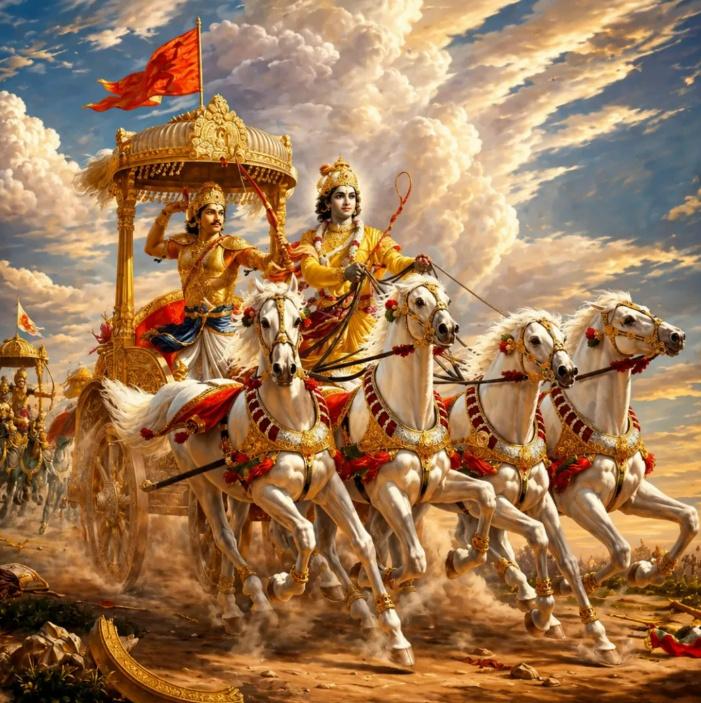
Source Lens: The Mahabharatha as the Inner Battlefield
In the outer lens, the Mahabharatha is the conflict between two branches of the Kuru dynasty: the Pandavas and the Kauravas. In the inner spiritual reading, especially in the interpretive spirit of Paramahansa Yogananda's God Talks With Arjuna, the battlefield of Kurukshetra is also the battlefield of human consciousness.
- The war is not only between two royal families. It is between clarity and blindness, soul and ego, wisdom and attachment, restraint and impulse, dharma and adharma.
- The Pandavas represent the higher faculties struggling to reclaim their rightful kingdom. The Kauravas represent the lower tendencies that have occupied the kingdom of the mind.
- Krishna represents divine wisdom. Arjuna represents the sincere seeker who is capable of doubt, but also capable of surrender, discipline, and transformation.
- Some characters show what to become. Some show what to overcome. Some show what happens when virtue is mixed with weakness.
With that lens, the symbolic map becomes:
- Hastinapura is the human being.
- Krishna is the divine guide without whom the inner war cannot be won.
- Arjuna is the seeking self or seeking soul.
- Kurukshetra is the field of daily inner choice.
- Dhritarashtra is blind attachment.
- Gandhari is chosen blindness.
- Duryodhana is envy.
- Dushasana is violent impulse.
- Karna is wounded greatness.
- Bhishma is rigid loyalty.
- Vidura is conscience.
- Sanjaya is witness-consciousness.
- Kunti is endurance and hidden karma.
- Draupadi is divine dignity.
- Yudhishthira is dharma.
- Bhima is life-force.
- Nakula is refinement.
- Sahadeva is intuition.
- The mind is the throne, the senses are the citizens, the ego wants control, and the soul wants liberation.
Pandavas, Kauravas, and the Inner Battlefield
In the deeper spiritual reading of the Mahabharatha, the war at Kurukshetra is not only an ancient dynastic conflict. It is the universal conflict inside human consciousness. Paramahansa Yogananda's God Talks With Arjuna presents the Bhagavad Gita as a psychological, spiritual, and metaphysical scripture, and SRF/YSS descriptions of his teaching emphasize the Gita as a guide to the soul's journey and the inner struggle between uplifting and downward-pulling tendencies.
This means the Pandavas and Kauravas can be read not merely as historical or mythological figures, but as symbolic forces. The Pandavas represent the higher faculties of the soul struggling to regain rightful rule. The Kauravas represent the many lower tendencies of ego, attachment, greed, fear, anger, envy, and restless desire that have occupied the kingdom of the body-mind.
1. The Pandavas as Higher Human Faculties
The five Pandavas are not random heroic brothers. Symbolically, they represent the purified powers required for spiritual victory. Each one is born through divine agency, meaning that the higher life cannot be produced merely by ordinary ego-effort. It has to be awakened through grace, discipline, and alignment with dharma.
Yudhishthira: The Faculty of Dharma
Yudhishthira represents truth, righteousness, ethical order, and moral intelligence. He is the part of us that wants to act correctly, speak truthfully, and live according to principle. But his failure in the dice game shows that moral goodness without alert discrimination can be manipulated. Dharma must be alive, awake, courageous, and practical.
| Aspect | Interpretation |
|---|---|
| Human nature represented | conscience, truthfulness, moral aspiration. |
| Distortion | passivity, over-dependence on rules, inability to resist manipulation. |
| Purpose in the epic | Yudhishthira shows that righteousness must grow into wisdom. A good person must also learn when to say no. |
| Inner question | Is my goodness active, or is it passive and easily exploited? |
Bhima: The Faculty of Vital Strength
Bhima represents prana, physical power, courage, appetite, emotional force, and the raw energy of life. He is the strength that breaks injustice when gentler methods fail. Without Bhima, dharma would remain weak. He shows that the lower nature cannot always be reasoned with; sometimes it must be overcome with disciplined strength.
| Aspect | Interpretation |
|---|---|
| Human nature represented | energy, courage, appetite, survival power, protective force. |
| Distortion | anger, excess, impulsiveness, vengeance. |
| Purpose in the epic | Bhima shows that spirituality is not weakness. Dharma needs strength to defend itself. |
| Inner question | Is my energy serving dharma, or is it serving anger and appetite? |
Arjuna: The Faculty of Focused Spiritual Will
Arjuna represents the disciplined seeker, the focused mind, the heroic soul, and the power of concentration. He is the one who receives the Bhagavad Gita because he is spiritually ready to question, break down, listen, and transform. His greatness is not that he never doubts. His greatness is that he brings his doubt to Krishna. His confusion becomes sacred because he does not hide it, justify it, or run away from it.
| Aspect | Interpretation |
|---|---|
| Human nature represented | spiritual aspiration, disciplined attention, heroic effort, sincerity. |
| Distortion | emotional paralysis, overthinking, despair before duty. |
| Purpose in the epic | Arjuna makes the Gita necessary. His crisis becomes the doorway to divine instruction. |
| Inner question | When I am confused, do I surrender to weakness, or do I seek higher guidance? |
Nakula: The Faculty of Refinement and Harmony
Nakula represents beauty, bodily discipline, grace, cleanliness, refinement, and harmonious conduct. He shows that the higher life must also refine the outer personality.
| Aspect | Interpretation |
|---|---|
| Human nature represented | refinement, grace, beauty, discipline of outer nature. |
| Distortion | vanity, attachment to appearance, superficial charm. |
| Purpose in the epic | Nakula shows that dharma should beautify life. |
| Inner question | Is my outer life aligned with inner dignity? |
Sahadeva: The Faculty of Intuition and Silent Wisdom
Sahadeva represents intuition, subtle intelligence, foresight, and quiet knowing. He symbolizes the wisdom that knows without needing to display itself.
| Aspect | Interpretation |
|---|---|
| Human nature represented | intuition, humility, subtle knowledge, inner timing. |
| Distortion | silence when speech is required, withdrawal, underuse of wisdom. |
| Purpose in the epic | Sahadeva shows that true wisdom may be quiet, but it must still serve dharma. |
| Inner question | Do I listen to my inner knowing, or do I ignore it because it is quiet? |
2. Draupadi as the Fire of Dignity
Draupadi is the shared spiritual fire that binds the five higher faculties together. Born from fire, she represents dignity, awakened energy, moral outrage, and the divine feminine demand for justice. Her humiliation in the dice hall symbolizes dignity itself being attacked while the institutions around it fail morally before the war begins physically.
| Aspect | Interpretation |
|---|---|
| Human nature represented | dignity, spiritual fire, moral courage, divine feminine force. |
| Distortion | rage without direction, pain becoming permanent bitterness. |
| Purpose in the epic | Draupadi exposes the failure of false dharma. Her suffering reveals that a society has already fallen before the war starts. |
| Inner question | When dignity is attacked, does my inner court speak or stay silent? |
3. The Kauravas as the Multiplicity of Lower Tendencies
There are one hundred Kaurava brothers. Symbolically, this number matters because the lower tendencies are many. Desire, anger, greed, pride, insecurity, resentment, and self-deception all appear in multiple forms.
The Pandavas are only five, but they are divinely aligned. The Kauravas are many, but inwardly disordered. This reflects the human condition: the higher faculties may be few and subtle, while lower impulses are numerous, noisy, and well-established.
Duryodhana: The Ego That Refuses to Yield
Duryodhana represents envy, entitlement, pride, and the ego's refusal to give rightful space to dharma.
| Aspect | Interpretation |
|---|---|
| Human nature represented | envy, entitlement, possessive ego, competitive insecurity. |
| Distortion | refusal to compromise, inability to rejoice in another's success. |
| Purpose in the epic | Duryodhana gives adharma a central personality. He is organized ego. |
| Inner question | Where in my life do I refuse to yield even when I know I should? |
Dushasana: The Violent Arm of Ego
Dushasana represents the aggressive execution of Duryodhana's will. He reveals the natural endpoint of unchecked adharma: the violation of dignity.
| Aspect | Interpretation |
|---|---|
| Human nature represented | cruelty, impulsive aggression, shameless obedience to ego. |
| Distortion | taking pleasure in domination. |
| Purpose in the epic | Dushasana shows that inner envy eventually becomes outer violence. |
| Inner question | What actions do I take when my ego feels threatened? |
Vikarna: Conscience Inside the Wrong Side
Vikarna objects to Draupadi's humiliation. He shows that even within the lower nature, a voice of conscience may remain.
| Aspect | Interpretation |
|---|---|
| Human nature represented | residual conscience, fairness, moral discomfort. |
| Distortion | conscience without enough strength to break away. |
| Purpose in the epic | Vikarna proves that group conditioning does not completely erase moral awareness. |
| Inner question | Do I honor the small voice within me that knows something is wrong? |
Yuyutsu: The Power to Leave the Wrong Side
Yuyutsu chooses to fight for the Pandavas. Symbolically, he represents ethical independence and the ability to leave one's inherited side when that side becomes adharmic.
| Aspect | Interpretation |
|---|---|
| Human nature represented | moral courage, independence, ethical clarity. |
| Distortion | isolation, pain of separation from one's own group. |
| Purpose in the epic | Yuyutsu shows that one can choose dharma over background, tribe, or group pressure. |
| Inner question | Am I loyal to truth, or only to my side? |
4. Krishna: Divine Wisdom and the Inner Guide
Krishna is the central divine presence of the Mahabharatha. As Arjuna's charioteer and teacher, he symbolizes divine wisdom guiding the individual soul's vehicle. Krishna does not remove the battle. Instead, he teaches the seeker how to act rightly within the battle. Grief becomes yoga when guided by divine intelligence.
| Aspect | Interpretation |
|---|---|
| Human or divine nature represented | divine intelligence, soul-guidance, cosmic wisdom, detached action. |
| Why Krishna acts as he does | he acts from dharma, not personal preference, and sees the whole karmic field. |
| Purpose in the epic | Krishna is the revealer of right action. |
| Inner lesson | The seeker does not need a life without conflict. The seeker needs divine guidance within conflict. |
| Inner question | Who is driving my chariot: impulse, fear, ego, or Krishna-conscious wisdom? |
5. Drona: Skill Without Complete Freedom
Drona represents knowledge, training, discipline, technique, and worldly mastery. But he is also bound by resentment, ambition, dependence on royal patronage, and attachment to his son Ashwatthama. His story warns that education and mastery are not the same as wisdom. One may be a great teacher and still be inwardly bound.
| Aspect | Interpretation |
|---|---|
| Human nature represented | skill, discipline, education, technical mastery. |
| Distortion | pride in knowledge, resentment, attachment to status, partiality. |
| Why Drona acts as he does | his choices arise from unresolved insecurity beneath his authority. |
| Purpose in the epic | Drona shows that knowledge must be purified by dharma. |
| Inner lesson | Being capable is not the same as being liberated. |
| Inner question | Are my skills serving truth, or are they serving insecurity and recognition? |
6. Ashwatthama: Wounded Ego Armed With Spiritual Power
Ashwatthama represents anger, wounded pride, inherited resentment, and the dangerous combination of spiritual power with an uncontrolled mind. After Drona's death, his grief turns into vengeance. He symbolizes how pain that is not transformed into wisdom can become poisonous action.
| Aspect | Interpretation |
|---|---|
| Human nature represented | wounded pride, revenge, rage, misused spiritual force. |
| Distortion | inability to process grief, cruelty justified as loyalty. |
| Why Ashwatthama acts as he does | he is driven by attachment, humiliation, rage, and the collapse of identity after defeat. |
| Purpose in the epic | Ashwatthama shows that the final danger may be the revenge that survives after the battle. |
| Inner lesson | Power without purification becomes destructive. |
| Inner question | What pain in me could become harmful if I do not transform it? |
7. Shakuni: Manipulative Intelligence
Shakuni represents cunning, strategy, psychological manipulation, and resentment disguised as intelligence. He corrupts the ruler's judgment by turning insecurity into strategy and jealousy into policy. Symbolically, Shakuni is the crooked reasoning inside the mind: cleverness without purity.
| Aspect | Interpretation |
|---|---|
| Human nature represented | manipulation, rationalization, cunning, toxic strategy. |
| Distortion | intelligence separated from ethics. |
| Why Shakuni acts as he does | he acts from grievance and uses Duryodhana as an instrument. |
| Purpose in the epic | Shakuni shows that adharma often wins first through the mind before it wins through weapons. |
| Inner lesson | The most dangerous thoughts are not always obviously evil. |
| Inner question | What inner Shakuni helps me rationalize what I know is wrong? |
8. Shikhandi: The Return of Unresolved Injustice
Shikhandi, linked to the story of Amba, represents the return of suppressed injustice. Bhishma's fall is tied to a wound from the past that was never resolved. This shows that no matter how powerful a person or system becomes, unresolved injustice remains a hidden vulnerability.
| Aspect | Interpretation |
|---|---|
| Human nature represented | unresolved pain, karmic return, identity transformation, justice delayed but not erased. |
| Distortion | revenge becoming the only meaning of life. |
| Why Shikhandi acts as they do | the action carries the force of unresolved humiliation returning as moral debt. |
| Purpose in the epic | Shikhandi shows that power and reputation cannot permanently hide from injustice left unresolved. |
| Inner lesson | What we refuse to repair returns as destiny. |
| Inner question | What past wound, ignored by my conscious mind, still shapes my actions? |
9. Abhimanyu: Heroic Innocence and Incomplete Knowledge
Abhimanyu represents youthful heroism, courage, purity, and partial knowledge. He knows how to enter the Chakravyuha but not how to exit it. His tragedy symbolizes the danger of entering life's battles with courage that is unsupported by complete instruction and elder protection.
| Aspect | Interpretation |
|---|---|
| Human nature represented | courage, innocence, youthful brilliance, heroic potential. |
| Distortion | overconfidence, entering complexity without complete wisdom. |
| Why Abhimanyu acts as he does | he acts from duty, courage, and loyalty. |
| Purpose in the epic | Abhimanyu reveals both the beauty and vulnerability of the next generation. |
| Inner lesson | Courage must be guided by complete knowledge. |
| Inner question | Where am I entering a complex battle without knowing how to exit? |
10. Bhishma, Drona, Karna, and Shalya: The Tragedy of Greatness on the Wrong Side
The Mahabharatha is not simplistic. The side of adharma is not filled only with small or evil people. It contains noble qualities serving the wrong alignment.
- Bhishma brings discipline.
- Drona brings knowledge.
- Karna brings generosity and courage.
- Shalya brings royal strength.
- Ashwatthama brings spiritual weaponry.
- Shakuni brings strategy.
- Duryodhana brings ambition.
| Aspect | Interpretation |
|---|---|
| Core lesson | A quality is not spiritually safe merely because it is impressive. The real question is what it serves. |
11. The Dice Game as the Inner Fall
The dice game represents the moment when discrimination is lost and the higher faculties gamble away their authority.
Yudhishthira loses wealth, kingdom, brothers, himself, and finally Draupadi. Symbolically, this is what happens when the moral faculty enters the game of ego under the rules of manipulation.
This inner sequence of downfall is clear: first the mind accepts the wrong game, then it risks its resources, then its strength, then its freedom, then its dignity, and finally only divine grace can protect what judgment failed to protect.
| Aspect | Interpretation |
|---|---|
| Inner lesson | Do not play games whose rules are controlled by adharma. |
12. Kurukshetra as Daily Life
Kurukshetra is not only a battlefield in ancient India. It is the field of action in every human life. Every day, the Pandavas and Kauravas meet within us.
- When we choose truth over convenience, Yudhishthira rises.
- When we use strength to protect what is right, Bhima rises.
- When we focus deeply and seek guidance, Arjuna rises.
- When we refine our conduct, Nakula rises.
- When we listen to intuition, Sahadeva rises.
- When dignity refuses humiliation, Draupadi rises.
- When divine wisdom guides action, Krishna holds the reins.
But when envy dominates, Duryodhana rises. When impulse becomes cruel, Dushasana rises. When intelligence manipulates, Shakuni rises. When blind attachment rules, Dhritarashtra rises. When silence protects injustice, the court of Hastinapura rises again within us.
The Mahabharatha becomes a mirror. It asks not only who won the war, but who is ruling inside you right now.
Conclusion: The Purpose of the Inner War
The deeper purpose of the Mahabharatha is not to glorify war, but to reveal the seriousness of inner conflict. The war becomes unavoidable because blindness, envy, manipulation, and injustice are not corrected when correction is still possible.
The Pandavas are not perfect, but they are correctable. The Kauravas are not without talent, but they are unyielding. Krishna does not remove Arjuna's duty, but illuminates it. Draupadi does not allow false peace to hide injustice.
The inner teaching is direct: do not wait until Kurukshetra becomes unavoidable. Correct Duryodhana when he is still only a thought. Stop Dushasana when he is still only an impulse. Question Shakuni when he is still only a justification. Listen to Vidura when conscience first speaks. Call Krishna before confusion becomes collapse.
The Mahabharatha is the story of the soul reclaiming the kingdom of consciousness from the forces that have occupied it.
In the end, the epic asks: Which of these forces is ruling my inner kingdom? Which part of me is blind? Which part is wounded? Which part seeks truth? Which part hears Krishna?